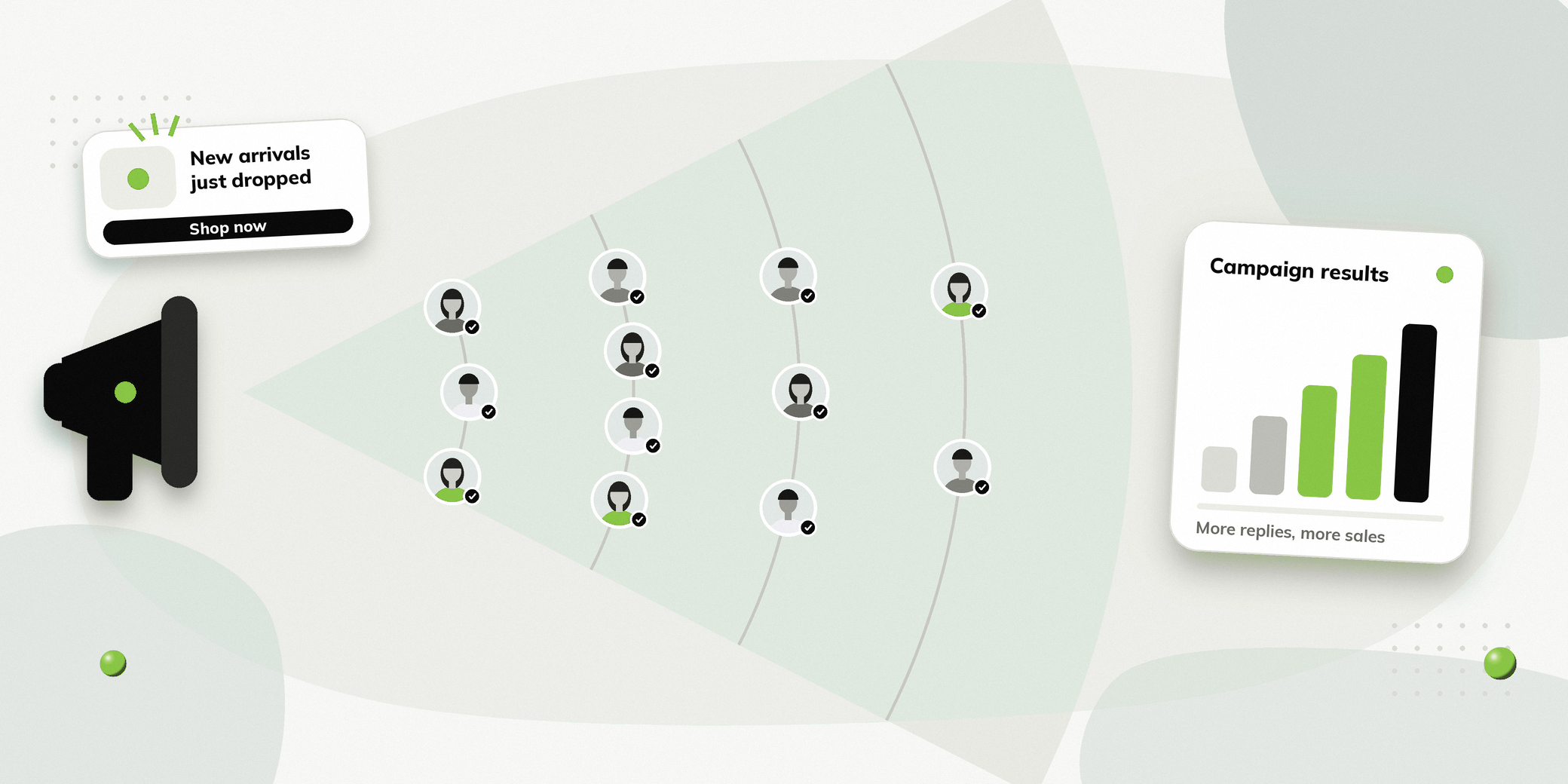
Sending the same WhatsApp message manually to hundreds or thousands of people can quickly become time consuming. It becomes even harder when businesses need to personalise messages, select different audiences, schedule campaigns, and track responses. That is where WhatsApp Marketing comes in.
WhatsApp Marketing allows businesses to communicate with relevant audiences through WhatsApp for promotions, product launches, re-engagement, reminders and other business communications.
Key Takeaways
- WhatsApp has an open rate of up to 98%, making it a powerful channel for business communication.
- Bulk WhatsApp messaging helps businesses reach large audiences without sending messages manually.
- Segmentation and personalisation make campaigns more relevant and effective.
- Approved templates and WhatsApp policies must be followed for business-initiated messages.
- Tracking delivery, reads, clicks and responses helps improve future campaigns.
What Is WhatsApp Marketing?
WhatsApp is a direct communication channel with high engagement. Industry sources commonly report open or read rates as high as 98%, although actual performance varies depending on the audience, campaign, and measurement method.
The important point is that bulk WhatsApp messaging should not simply mean sending the same message to everyone. Businesses need to consider the audience, relevance, timing, and messaging frequency.
A better approach is:
Relevant audience → Relevant message → Appropriate timing → Clear action
Why Do Businesses Use WhatsApp for Bulk Messaging?
Bulk messaging can help businesses reach a large audience without manually sending the same message to every person.
| Traditional approach | WhatsApp Marketing |
|---|---|
| Message contacts individually | Send campaigns to a selected audience |
| Repeat the same message manually | Use reusable message templates |
| Limited personalisation | Add relevant customer information |
| Difficult to manage large campaigns | Manage campaigns from one platform |
| Manual campaign tracking | Track delivery, reads and responses |
For example, a retail business launching a new collection could select a relevant audience, prepare a campaign with product information and a call to action, schedule the campaign, and then manage incoming conversations.
The benefit is not simply reaching more people. It is making the communication process more manageable as the audience grows.
How to Send Bulk WhatsApp Messages Efficiently
1. Start With the Right Audience
The first question should not be: How many people can I message? It should be: Who should receive this message?
Consider a business with 10,000 contacts. Sending the same campaign to all 10,000 people may not be the most relevant approach. Instead, the business could create segments such as:
| Audience | Possible campaign |
|---|---|
| Recent buyers | New product recommendation |
| Inactive customers | Re-engagement offer |
| Product-interested leads | Product launch |
| High-value customers | Exclusive offer |
| New enquiries | Welcome message |
Segmentation allows businesses to communicate with people based on their interests, previous interactions, or relationships with the business.
2. Create a Clear Message
A good campaign message should communicate its purpose quickly. A simple structure is:
- What is happening?
- Why does it matter?
- What should the recipient do next?
Businesses can also use rich media and interactive elements where appropriate. The message should give the recipient enough information to understand the offer without making the conversation unnecessarily long.
3. Use Approved WhatsApp Templates
For business-initiated messages through the WhatsApp Business Platform, businesses use approved message templates. Templates can be created for different communication purposes and submitted for approval before they are used in campaigns.
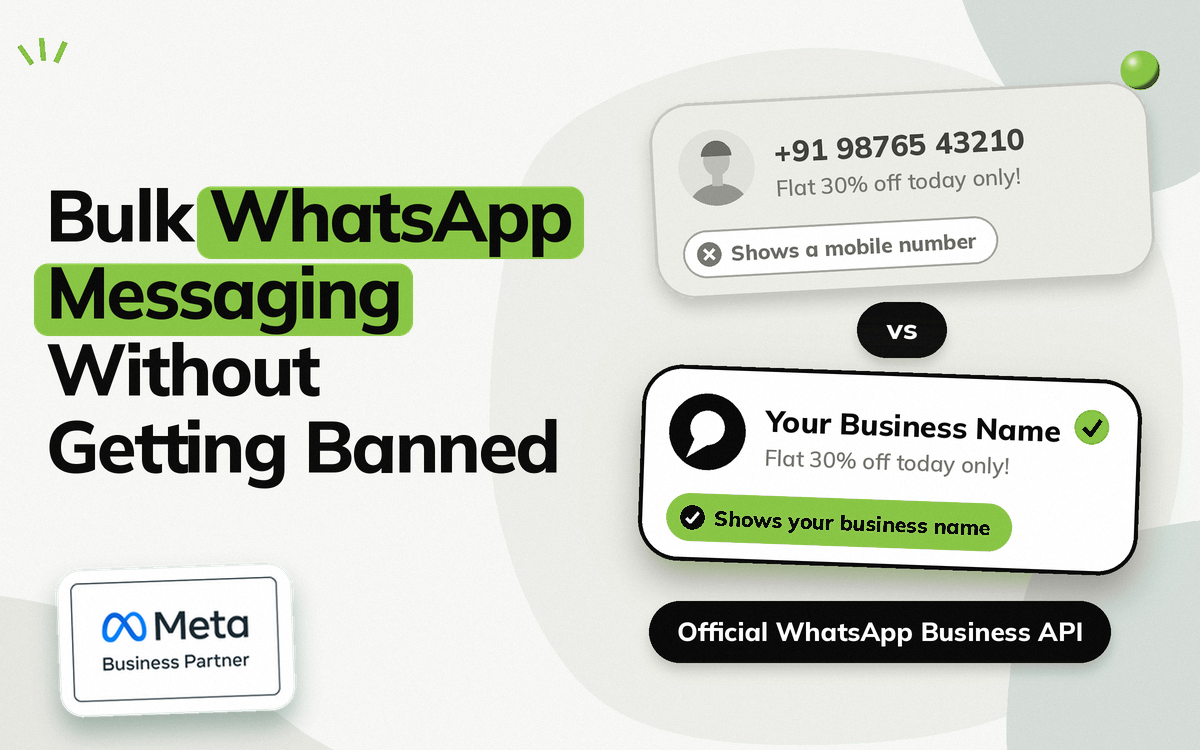
This is important because businesses should not treat WhatsApp as an unrestricted bulk messaging channel. The content, messaging practices and use of WhatsApp must follow the applicable WhatsApp Business policies.
4. Personalise the Campaign
Bulk messaging does not have to mean sending an identical message with no personalisation. For example:
Hi {{Name}}, the new collection you’ve been waiting for is now available.
The campaign can remain largely the same while using relevant information to make the message more personal. Personalisation can be particularly useful when communicating with different customer segments.
5. Schedule Campaigns in Advance
If a campaign needs to go out at a specific time, scheduling can make the process easier. Businesses can prepare campaigns around:
- Product launches
- Seasonal offers
- Sales periods
- Customer re-engagement
- Appointment cycles
- Important announcements
Scheduling also reduces the need for someone to manually send campaigns at a particular time.
6. Track What Happens After Sending
Sending the campaign is only one part of the process. The next question is: What did people do after receiving the message? A campaign can be viewed as:
Sent → Delivered → Read → Clicked → Replied → Converted
Businesses can use campaign data to understand where people are engaging, and which messages are generating interest.
| Metric | What it tells you |
|---|---|
| Sent | Number of messages attempted |
| Delivered | Number that reached recipients |
| Read | Number that were opened or read |
| Clicked | Number that interacted with the CTA |
| Replied | Number that started a conversation |
Tracking these actions makes it easier to improve future campaigns.
How to Avoid Bulk WhatsApp Messages Becoming Spam
Bulk WhatsApp messaging should not become a numbers game.
Meta has introduced controls around business messaging, including limits on marketing messages people can receive. People can also block or report businesses and provide feedback on marketing messages. Repeated violations of WhatsApp policies can result in messaging restrictions.
The basic principle is:
Permission + Relevance + Appropriate Frequency
Businesses should make sure their campaigns are relevant to the people receiving them and respect their communication preferences.
For example, a person who has shown interest in a particular product may find a product update useful. Sending unrelated promotional messages repeatedly may create a poor experience. The goal should be to make each campaign useful rather than simply increasing the number of messages sent.
Bulk WhatsApp Messaging vs WhatsApp Marketing
The two terms are often used interchangeably, but they describe slightly different things.
| Bulk WhatsApp Messaging | WhatsApp Marketing |
|---|---|
| Focuses on sending messages at scale | Focuses on the complete communication strategy |
| Primarily concerned with reach | Considers audience and relevance |
| Can be a single campaign | Can include multiple campaigns |
| Focuses on message delivery | Considers engagement and business actions |
| Message volume is central | Audience quality is central |
Bulk messaging is a method. WhatsApp Marketing is the broader strategy around using that method effectively.
How Vezly Helps Businesses Run WhatsApp Marketing Campaigns
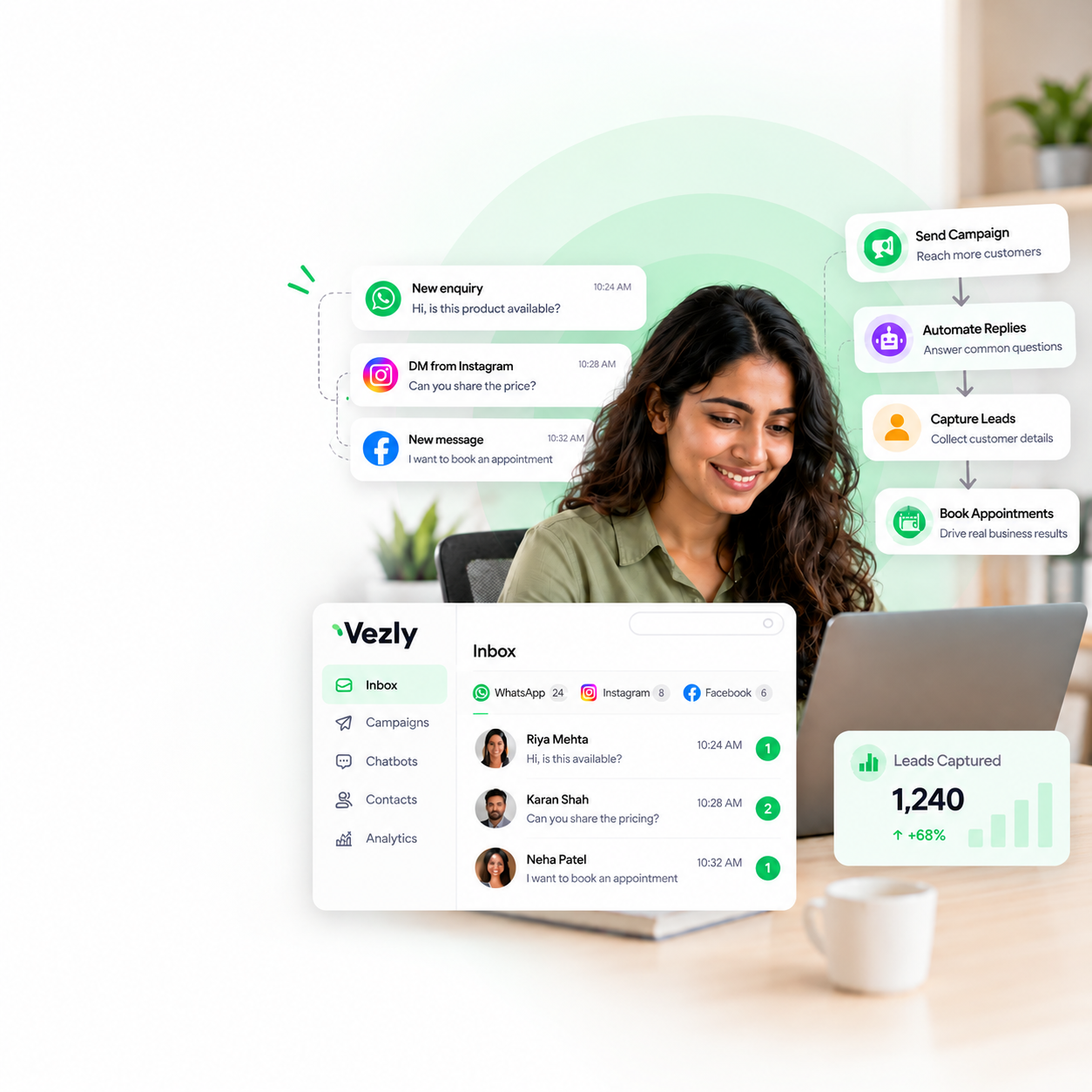
Vezly helps businesses manage WhatsApp campaigns from one platform. The process can be simplified into:
Segment → Create → Personalise → Schedule → Send → Track → Respond
| Vezly capability | What it helps with |
|---|---|
| Customer Segments | Select the right audience |
| Template Manager | Create and manage WhatsApp templates |
| Campaign Manager | Set up and manage campaigns |
| Campaign Scheduler | Schedule campaigns in advance |
| Personalisation | Add relevant customer information |
| Campaign Analytics | Understand campaign performance |
| Live Chat | Manage incoming responses |
For example, a retailer launching a new collection could create a segment of relevant contacts, prepare a campaign with product information and a Shop Now button, schedule the campaign and then manage responses from the same platform.
The campaign does not end when the message is delivered. People who respond can continue into a conversation where the business team can provide assistance. Teams can also set up no-code chatbot flows to answer common questions automatically.
Example: WhatsApp Marketing Campaign
Imagine a D2C fashion brand launching a new collection.
Campaign setup
| Campaign element | Example |
|---|---|
| Audience | 2,500 relevant contacts |
| Purpose | New collection launch |
| Message | New Collection Is Here |
| CTA | Shop Now |
| Timing | Scheduled launch |
| Measurement | Delivery, reads, clicks and responses |
Campaign journey
- 2,500 selected contacts
- Approved WhatsApp template
- Personalised campaign
- Scheduled send
- Delivery and read tracking
- People click or reply
- Interested people continue the conversation
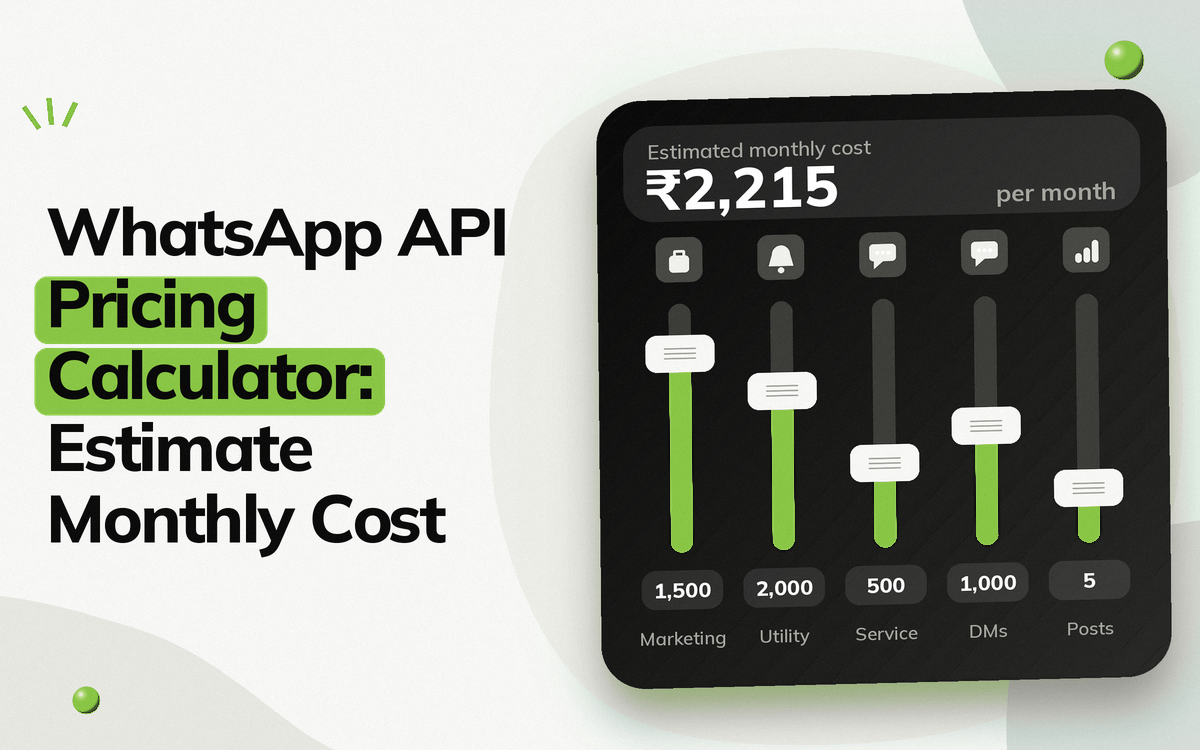
This is much more manageable than manually sending the same message to thousands of people. You can also estimate the cost of a campaign before sending: at ₹0.99 per Marketing message, 2,500 contacts comes to roughly ₹2,475.
Best Practices for WhatsApp Marketing
| Do | Avoid |
|---|---|
| Segment your audience | Sending every campaign to everyone |
| Keep messages relevant | Sending unrelated promotions |
| Use approved templates | Treating WhatsApp like unrestricted bulk SMS |
| Add a clear CTA | Making the next step unclear |
| Track campaign performance | Measuring only the number sent |
| Respect communication preferences | Repeated unwanted messages |
A successful campaign is not necessarily the one that sends the most messages. It is the one that reaches the right audience with a relevant message and generates a useful response.
Bottom Line
WhatsApp Marketing can help businesses reach relevant audiences without manually messaging every person. But efficient bulk messaging is not about sending the highest possible number of messages.
It is about sending the right message to the right audience at the right time, then measuring what happens afterwards.
With audience segmentation, approved templates, personalisation, scheduling and campaign analytics, businesses can turn bulk messaging into a more structured marketing process.
The objective should not simply be to send more messages. It should be to send more relevant messages to the right people.
To see how pricing works per message, read about pay-as-you-go WhatsApp API pricing.
Frequently Asked Questions
Can I send bulk WhatsApp messages to customers?
Yes. Businesses can use the WhatsApp Business Platform to communicate with audiences at scale, subject to WhatsApp’s policies, messaging requirements and applicable consent requirements.
Is bulk WhatsApp messaging the same as WhatsApp Marketing?
No. Bulk messaging refers to communicating with many recipients at scale. It covers the broader strategy, including audience selection, messaging, timing, engagement and follow up.
Can I personalise bulk WhatsApp messages?
Yes. Businesses can personalise message templates with relevant customer information where supported by their WhatsApp Business Platform setup.
How often should a business send bulk WhatsApp messages?
There is no single frequency that works for every business. It depends on the audience, message type and context. Businesses should avoid excessive messaging and pay attention to engagement and recipient feedback.
Can bulk WhatsApp messages get a business number restricted?
Businesses can face messaging restrictions if they violate WhatsApp’s policies. Repeated violations can result in restrictions that increase in duration and severity.