Understanding WhatsApp API pricing is not only about comparing the messaging rate.
The pricing model itself can have a major impact on what you spend each month.
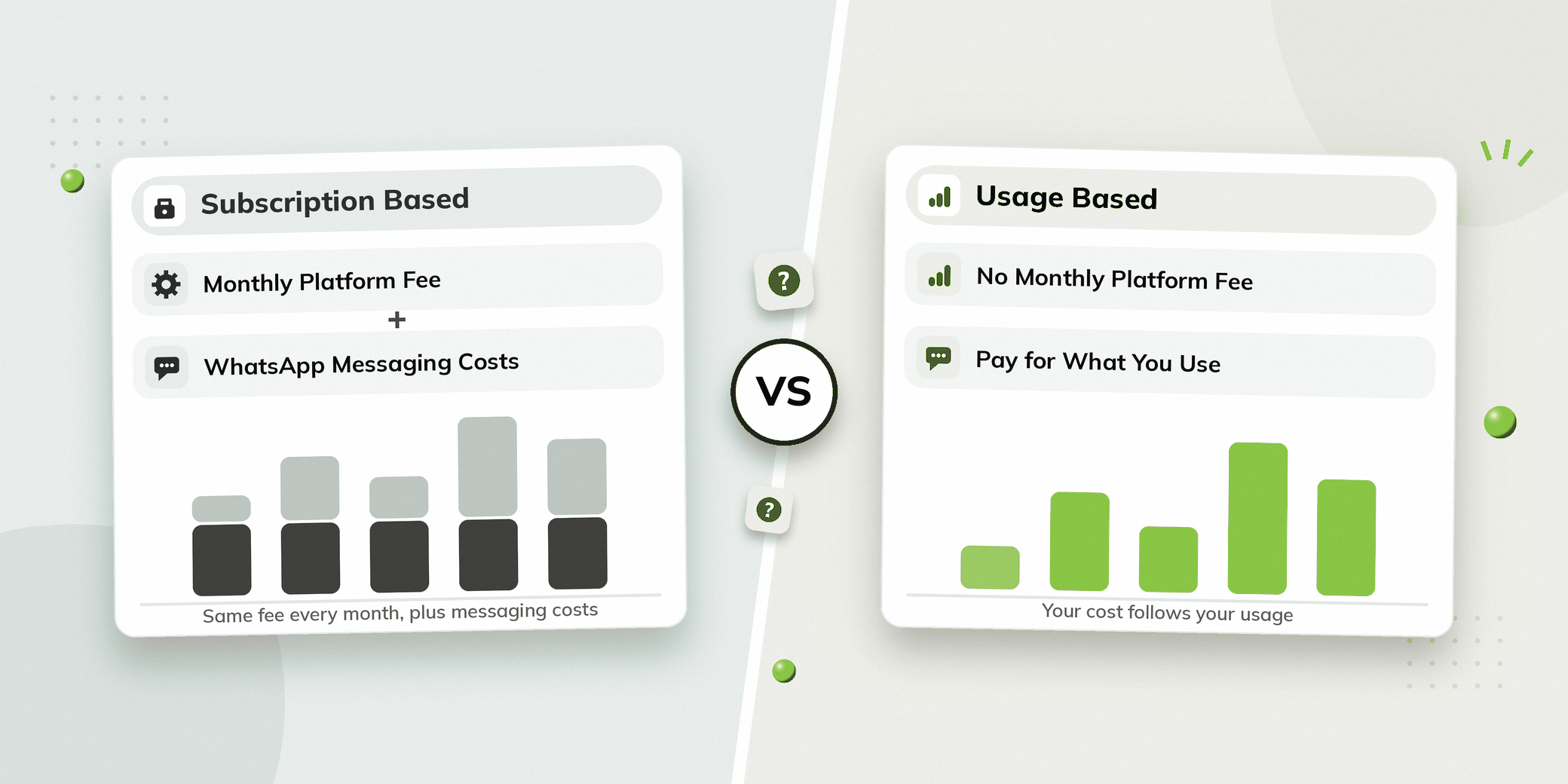
Some providers charge a recurring platform subscription and then charge separately for WhatsApp messaging.
Others use a usage-based model, where there is no recurring software fee, and you pay for what you actually use.
So which one costs less?
The answer depends on your usage. But for businesses with lower or fluctuating communication volumes, avoiding a fixed platform fee can make a significant difference.
This guide compares both models and shows how to think about the WhatsApp API cost before choosing a provider.
What Is Subscription Based WhatsApp API Pricing?
Under a subscription model, you pay a recurring fee to use the software or platform.
Your monthly cost can look like:
Platform subscription + WhatsApp messaging costs
For example, imagine a provider charges ₹5,000/month as a platform fee and your WhatsApp usage costs another ₹1,000/month.
Your total monthly spend becomes ₹6,000.
Even if your messaging activity drops significantly the following month, the platform subscription may still apply.
The important point is that you are paying for access to the platform as well as the communication you use.
What Is Usage Based WhatsApp API Pricing?
A usage-based model, often described as a pay as you go WhatsApp API model, works differently.
Instead of paying for a recurring software subscription, you pay based on what you actually use.
The basic model is:
Usage × applicable rate = cost
Depending on the platform, usage could include messages or other billable actions.
With Vezly’s WhatsApp API pricing, there is no monthly software subscription. Businesses add balance to their wallet, and that balance is consumed as they use the platform.
This means a business with lower activity does not have to keep paying a fixed software fee during quieter months.
Subscription vs Usage Based: Key Differences
The main difference is what you are paying for.
| Subscription Based | Usage Based | |
|---|---|---|
| Software fee | Recurring | ₹0/month with Vezly |
| Messaging cost | Paid separately | Paid based on usage |
| Quiet months | Fixed fee continues | Spend can decrease |
| High usage | Platform fee + usage | Usage based |
| Cost visibility | Fixed platform fee + usage | Directly linked to usage |
| Team growth | May depend on plan or seats | No separate software subscription |
| Best suited to | Businesses comfortable with recurring software costs | Businesses that want costs linked to actual usage |
Why Does the Pricing Model Matter?
Two providers can offer similar WhatsApp features but produce very different monthly costs.
Consider a business that has very different communication volumes each month.
| Month | Usage | Subscription Model | Usage Based Model |
|---|---|---|---|
| Month 1 | Low | Platform fee + usage | Usage |
| Month 2 | Medium | Platform fee + usage | Usage |
| Month 3 | High | Platform fee + usage | Usage |
With a subscription model, the platform fee remains part of the cost regardless of how much the business communicates.
With usage-based pricing, the software cost does not create a fixed monthly expense.
This becomes particularly relevant for businesses with seasonal campaigns, changing enquiry volumes, or occasional WhatsApp usage.
When Can Usage Based WhatsApp API Pricing Cost Less?
Usage based pricing can be particularly attractive when a business does not use the platform heavily every month.
For example:
Businesses With Seasonal Demand
A retail business may send significantly more messages during festive campaigns than during quieter months.
A fixed software fee continues throughout the year.
With usage-based pricing, spending can move more closely with communication activity.
Small Businesses in India
A small clinic, consultant or local business in India may only need WhatsApp automation for a few hundred or thousand interactions each month.
Paying a recurring platform fee can make the software cost a significant part of the overall spend.
Businesses Testing WhatsApp Automation
A business may want to try WhatsApp automation and test campaigns before committing to a recurring software subscription.
A usage-based model lets the business start with actual usage rather than committing to a fixed platform cost.
Businesses With Fluctuating Usage
If communication volumes change significantly from month to month, usage-based pricing avoids paying the same platform fee during both high and low activity periods.
Does Usage Based Pricing Always Cost Less?
Not necessarily.
The answer depends on how much you use and what the provider charges for that usage.
A business with very high and consistent usage may need to compare the total cost carefully.
The right comparison is not:
Monthly subscription vs message price
It is:
Total monthly cost under each model
Consider:
- Platform or subscription fee
- Messaging costs
- Other usage charges
- Number of users or seats
- Additional features
- Setup fees
- Minimum commitments
This gives you a more realistic picture of what you will actually spend.
How to Do a WhatsApp API Pricing Comparison
Before choosing a provider, calculate the total cost rather than looking at one price. This is also the easiest way to compare WhatsApp Business API pricing across providers.
1. Check the Platform Fee
Is there a monthly or annual software subscription?
2. Check the Messaging Cost
Understand the WhatsApp message types and charges that apply, and how much you pay for each type of WhatsApp message.
3. Check for User or Seat Charges
Some platforms may include limits on the number of users or charge more as your team grows.
4. Check Additional Usage Charges
Look beyond messaging.
Depending on the platform, other features or channels may have separate charges.
5. Check Minimum Commitments
A low advertised price may come with a minimum monthly commitment.
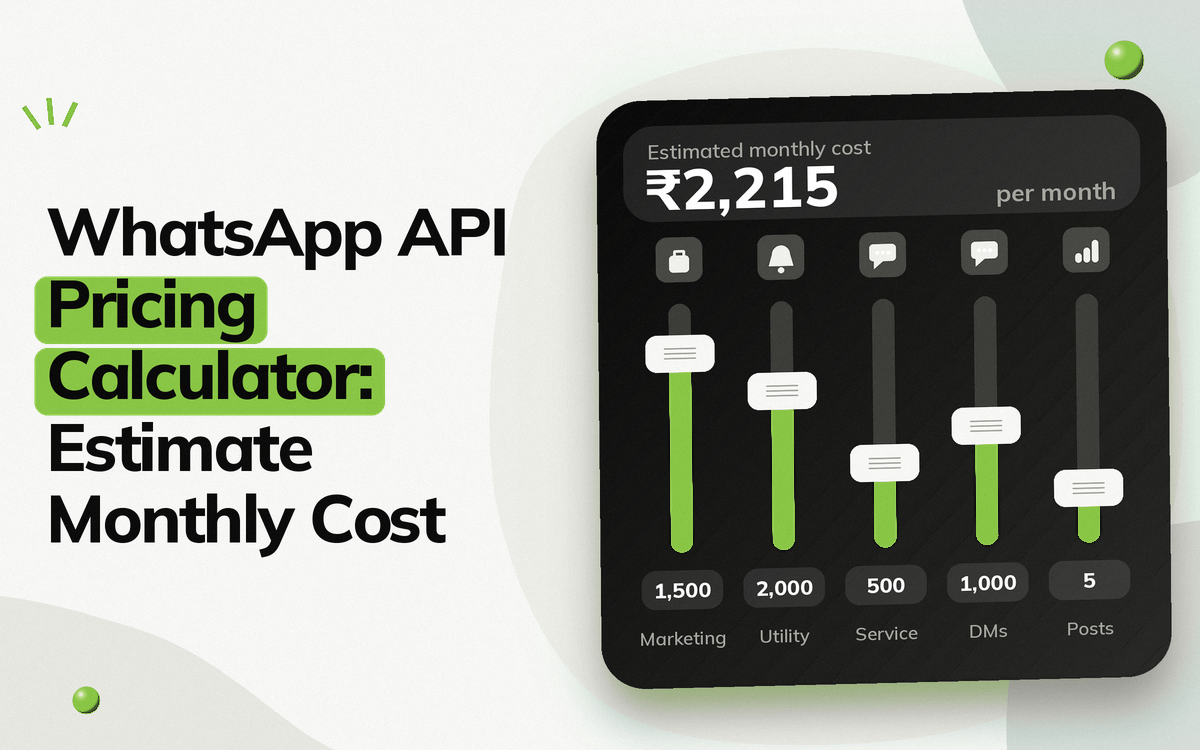
6. Calculate Your Actual Monthly Usage
Estimate how many messages and other billable actions you expect to use.
Then compare the total monthly cost, not just the advertised platform price.
How Vezly’s Usage Based Model Works
Vezly follows a pay only for what you use model.
There is no monthly software subscription.
Businesses add balance to their Vezly wallet, and the balance is consumed as they use the platform.
The wallet can be used across different communication and automation activities.
This means a business does not have to pay a fixed software fee simply to keep the platform active.
If usage is low, the amount consumed can be low.
If usage increases, spending increases with it.
The model is designed to keep the software cost tied to actual usage.
What Does “Pay Only for What You Use” Mean?
It is important to understand what this phrase actually means.
It does not mean WhatsApp communication itself is free.
Businesses still pay applicable communication or usage charges.
What it means is that Vezly does not add a recurring software subscription on top of those usage costs.
For example:
Subscription model
Platform fee + WhatsApp usage + Other applicable charges
Vezly usage-based model
WhatsApp usage + Other applicable usage
This is the main difference in pricing structure.
What Should You Choose?
There is no single pricing model that suits every business.
A subscription model can make sense for businesses that are comfortable with a recurring platform cost and expect consistent usage.
A usage-based model can make sense for businesses that want their software spending to move more closely with their actual usage.
The most useful question is:
How much will I actually spend each month under each model?
Compare the complete cost using your expected WhatsApp volume rather than choosing based on the platform fee or message rate alone.
Final Thoughts
WhatsApp API pricing is not just about the cost of sending a message.
The pricing model behind the platform can have an equally important impact on your monthly spend.
With a subscription model, businesses pay a recurring platform fee in addition to WhatsApp usage.
With a usage-based model, the software cost is not fixed. You pay based on what you actually use.
For businesses with variable or lower communication volumes, this can make the cost structure simpler and reduce the expense of maintaining software during quieter periods.
Vezly follows this usage-based approach with no monthly software subscription, so businesses pay their actual usage rather than paying a recurring fee simply to access the platform.
FAQs
What is the difference between subscription and usage-based WhatsApp API pricing?
Subscription pricing includes a recurring platform fee along with applicable messaging costs. Usage based pricing does not charge a recurring software subscription and instead links the cost to actual usage.
Is usage-based WhatsApp API pricing cheaper?
It can be, particularly for businesses with lower or variable usage. However, the total cost depends on the provider’s usage rates and your communication volume.
Does Vezly charge a monthly software subscription?
No. Vezly uses a usage-based model with no monthly software subscription.
Do I still pay for WhatsApp messages with Vezly?
Yes. Applicable communication charges still apply. The difference is that there is no separate recurring software subscription.
Is usage-based pricing suitable for small businesses?
It can be useful for small businesses that want their software spending to correspond more closely with actual usage rather than paying a fixed monthly platform fee. Learn more about WhatsApp API for small businesses.
What should I compare when choosing a WhatsApp API provider?
Compare the complete cost, including platform fees, messaging charges, user or seat charges, additional usage costs, setup fees and minimum commitments.